
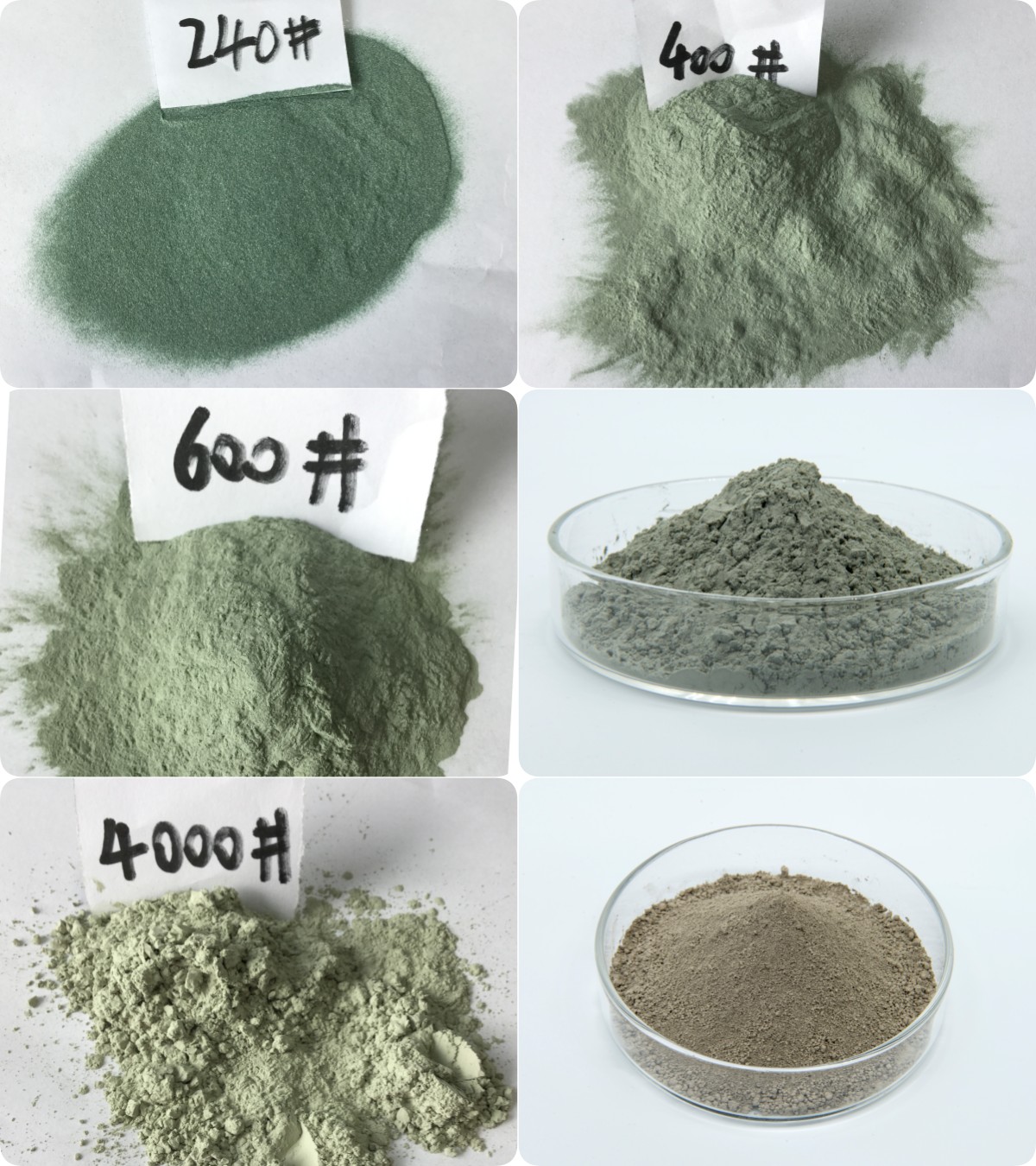
Why is green silicon carbide powder added in ceramic modification?
Adding green silicon carbide powder to ceramic composites primarily leverages its ultra-high purity (≥99%), exceptional hardness (Mohs 9.2–9.3), excellent thermal conductivity, and chemical stability to significantly enhance the matrix’s wear resistance, strength, heat dissipation efficiency, and corrosion resistance, while also helping to lower sintering temperature.
Enhanced Mechanical Properties: Green silicon carbide, second only to diamond and cubic boron nitride in hardness, acts as a reinforcing phase dispersed within the ceramic matrix. By impeding crack propagation and bearing mechanical loads, it significantly improves the final product’s hardness, wear resistance, and flexural strength, making it ideal for high-wear applications such as seals and bearings.
Improved Thermal Performance: With a high thermal conductivity (approximately three times that of copper) and low coefficient of thermal expansion, its addition effectively dissipates heat rapidly and suppresses localized overheating, reducing the risk of thermal stress cracking and enhancing the ceramic’s thermal stability under extreme temperature variations.
Promoted Sintering Densification: Under specific processing conditions, it can serve as a sintering aid, lowering sintering temperatures and shortening holding times via liquid-phase sintering mechanisms. This improves microstructural density, reduces energy consumption, and increases yield.
Enhanced Chemical Inertness: High purity confers excellent resistance to acid-base corrosion and oxidation, ensuring long-term stability of the ceramic matrix in harsh environments such as chemical processing and metallurgy.