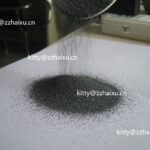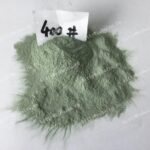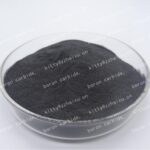
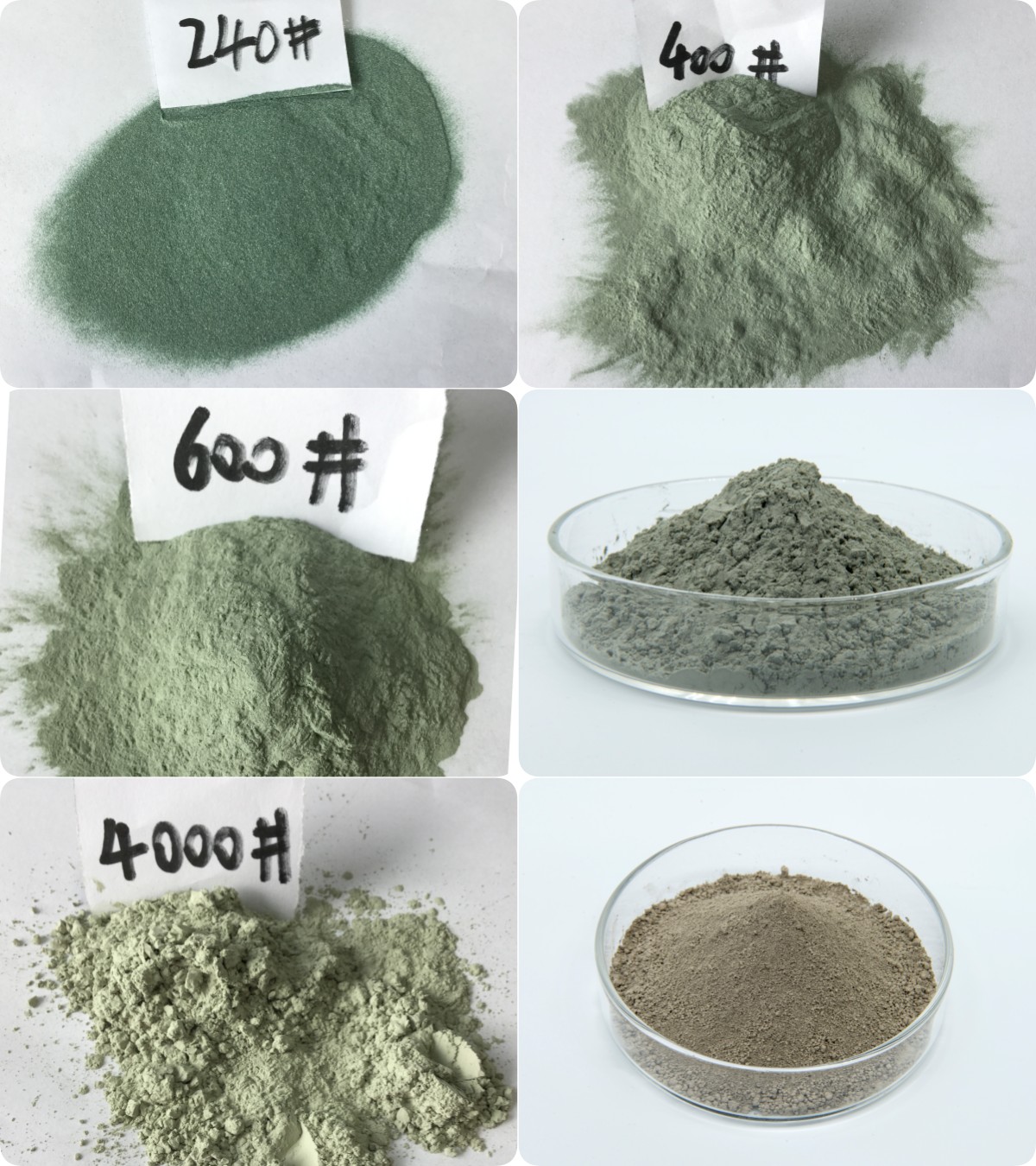
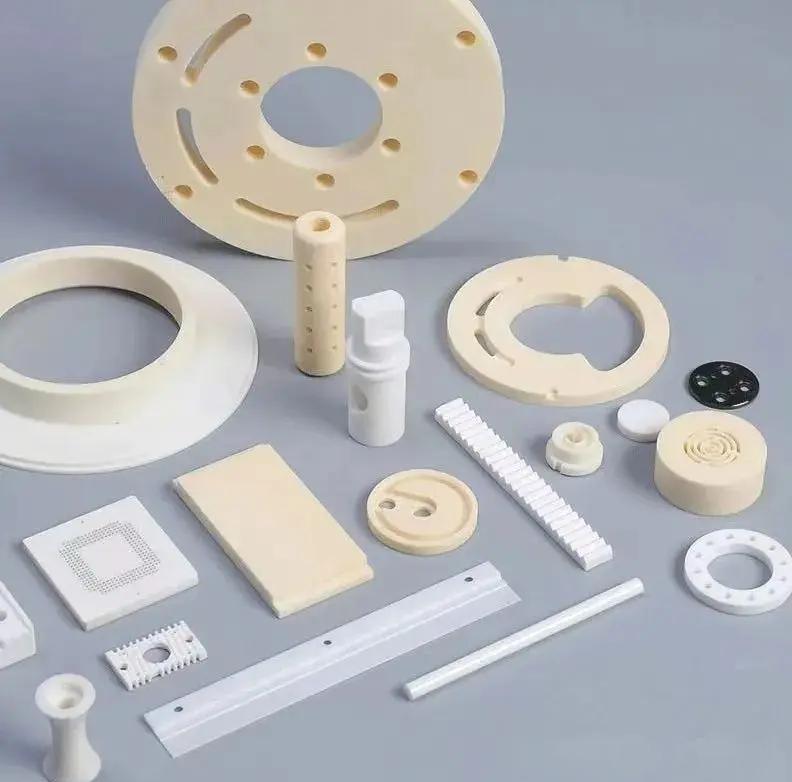
For sandblasting ceramic components, green SiC powder is the preferred choice because it perfectly matches the processing requirements of ceramics: hardness, brittleness, precision, and high cleanliness. It possesses sufficient hardness for cutting, controllable brittleness to prevent chipping, good thermal conductivity and heat dissipation, high purity with no impurities, uniform particle size, strong self-sharpening properties, and chemical stability, making it the “golden abrasive” for ceramic sandblasting.
I. Core Physical Properties Adapted to Ceramic Processing
1. Ultra-high Hardness, Efficient Delamination Without Damaging the Substrate
Mohs hardness 9.2–9.5 (Vickers 2800–3300 HV), second only to diamond and cubic boron nitride, and far exceeding that of ceramics (alumina ceramics approximately 9, zirconium oxide approximately 8.5).
It can quickly remove oxide scale, burrs, sintering residues, flash, and coatings from ceramic surfaces, with high cutting efficiency and without excessively damaging the substrate.
2. Moderate Brittleness + Self-Sharpening: Prevents Chipping and Maintains Precision
Ceramics (especially electronic ceramics, alumina/zirconia) are extremely brittle and prone to chipping. Ordinary hard abrasives (such as brown fused alumina) easily cause chipping and microcracks.
Green sic powder is brittle yet sharp. Under sandblasting stress, it undergoes controlled breakage along grain boundaries, continuously generating new cutting edges. This ensures cutting force while avoiding chipping caused by hard impacts.
Self-sharpening ensures stable sandblasting throughout the process, preventing repeated impacts due to abrasive blunting and reducing ceramic damage.
3. High Thermal Conductivity + Low Thermal Expansion: Prevents Thermal Damage
With a thermal conductivity of 70–130 W/(m·K), 3–4 times that of alumina, the heat generated by high-speed friction during sandblasting can be quickly dissipated, preventing localized overheating, thermal stress cracking, discoloration, or performance degradation of the ceramic.
A low coefficient of thermal expansion (approximately 4 × 10⁻⁶/℃) ensures dimensional stability under temperature fluctuations, without affecting machining accuracy. 4. Uniform Particle Size, No Large Particles, Excellent Surface Consistency: The micro-powder undergoes precise grading, resulting in a narrow particle size distribution and no ultra-large particles. This ensures uniform sandblasting impact and controllable surface roughness (Ra), making it suitable for precision surface treatment of electronic ceramics, ceramic substrates, MLCCs, etc.
II. Chemical and Purity Advantages, Compatible with Electronic Ceramics
1. High Purity, Low Impurities, No Secondary Contamination: SiC purity ≥98.5%, with some high-end products reaching 99%+, and extremely low levels of free silicon, iron, and carbon impurities.
No impurities or metal contamination remain after sandblasting, and it does not affect the insulation, conductivity, voltage resistance, or reliability of ceramic components. It is especially suitable for electronic-grade products such as MLCCs, ceramic substrates, and packaging ceramics.
2. Strong Chemical Stability, Acid and Alkali Resistance, High Temperature Resistance: Resistant to acids, alkalis, and high temperatures (operating temperature approximately 1900℃), it does not chemically react with ceramics after sandblasting, does not corrode the workpiece, and is not corroded by ceramics/cleaning media. It is recyclable.
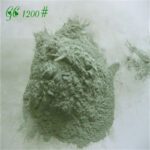
Green SiC powder 1200#: